Oil and Gas Project Finance: How to Structure, Fund and De-Risk Energy Projects


Heading: Oil and Gas Project Finance
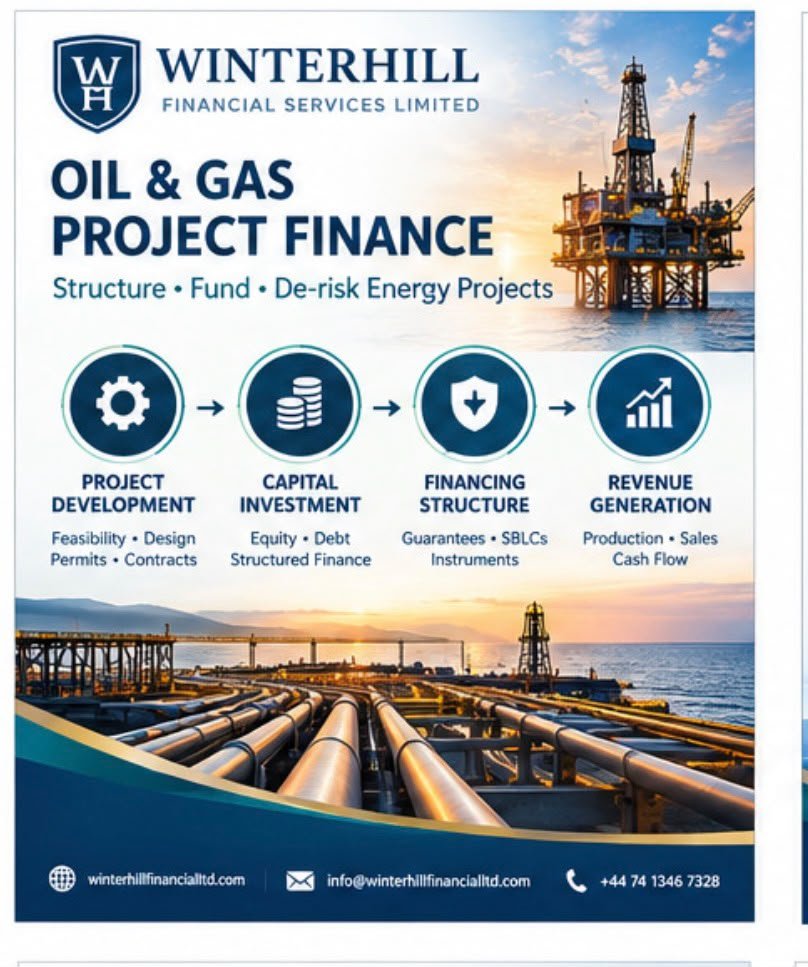
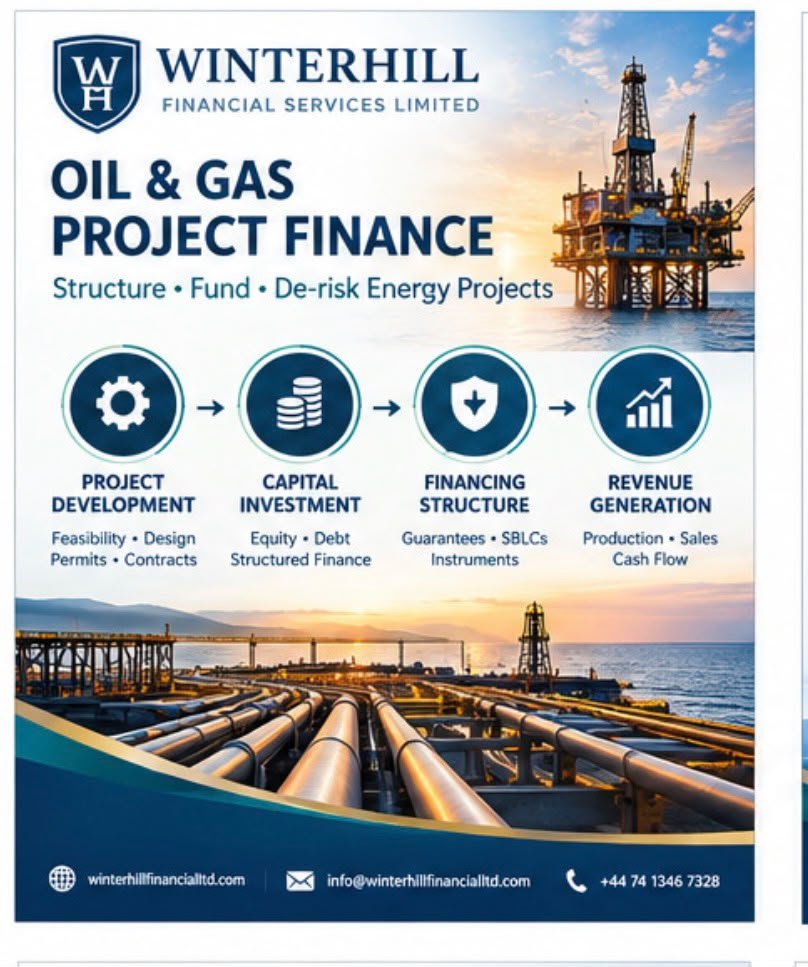
Oil and gas building remains one of the most capital-intensive sectors of the global economy. From exploration and production to pipeline construction, gas processing, storage facilities and petroleum distribution, energy projects require substantial financial resources, careful planning and effective risk management.
For project developers and investors, securing capital is only one part of the challenge. The more important consideration is establishing a financial structure that can support the project throughout its development, construction and operational stages.
This is where oil and gas project finance becomes particularly important.
A well-structured financing arrangement connects project funding requirements with realistic revenue projections, appropriate debt facilities, financial instruments, contractual obligations and risk mitigation strategies. Without these elements, even a technically promising energy project may struggle to attract lenders or financial partners.
At Winter Hill Financial Services Limited, we recognise the importance of structured funding solutions in supporting business expansion, infrastructure development and international commercial projects. Through our financial services, including debt financing, project funding support, Bank Guarantees (BGs), Standby Letters of Credit (SBLCs) and financial instrument solutions, we help clients explore appropriate funding structures for their financial requirements.
This guide examines how oil and gas project financing works, the available funding structures, how financial instruments can support transactions, the risks involved and what project sponsors should consider before approaching potential financing partners.
What Is Oil and Gas Project Finance?
Oil and gas project finance is a funding approach used to develop energy-related assets and infrastructure through carefully structured financial arrangements.
Rather than relying exclusively on the financial strength of the project sponsor, project finance typically considers the project's anticipated cash flows, assets, contractual arrangements, commercial viability and ability to meet its financial obligations.
Depending on the transaction, financing may involve:
Commercial bank loans.
Institutional and private investment.
Project-based debt financing.
Sponsor equity contributions.
Structured finance arrangements.
Bank Guarantees (BGs).
Standby Letters of Credit (SBLCs).
Other acceptable credit-support instruments.
A project may also operate through a Special Purpose Vehicle (SPV), which is a separate legal entity established to own, develop or operate the relevant project.
The SPV can help separate project-related assets, liabilities, contracts and revenues from the sponsor's other business activities.
However, the structure must be carefully designed to satisfy legal, financial and lender requirements.
The ultimate objective is to establish a financing arrangement that provides sufficient capital while maintaining a sustainable repayment structure.
Why Oil and Gas Projects Require Strategic Financial Structuring
Energy infrastructure projects involve significant upfront expenditure and may take several years to generate meaningful revenue.
For example, developing an offshore oil field requires investment in exploration, drilling equipment, engineering, transportation infrastructure, personnel and environmental compliance.
Similarly, constructing a gas processing facility or petroleum storage terminal requires substantial capital before the facility can become commercially operational.
These requirements create several financial challenges.
1. High Initial Capital Requirements
Oil and gas developments frequently require substantial capital expenditure before production or commercial operations begin.
Project sponsors must therefore identify suitable financing arrangements capable of supporting development and construction activities.
2. Long Development Timelines
Delays in construction, regulatory approvals, equipment delivery or commissioning can increase project costs and affect projected revenues.
Financing structures should account for these possibilities.
3. Commodity Price Volatility
Oil and natural gas prices fluctuate in response to market conditions, geopolitical developments, supply disruptions and global demand.
A project that appears profitable under favourable pricing conditions may become financially challenging when market prices decline.
4. Complex International Transactions
Many oil and gas projects involve international contractors, equipment suppliers, financial institutions, governments and commercial buyers.
These relationships introduce additional contractual, currency, regulatory and counterparty risks.
5. Financing and Credit Requirements
Lenders and financial institutions require evidence that a proposed project has a credible commercial foundation and a reasonable ability to meet its obligations.
Consequently, project sponsors must prepare appropriate financial models, technical documentation, legal agreements and funding proposals.
Understanding the Main Financing Structures for Oil and Gas Projects
There is no universal financing structure suitable for every energy project.
The appropriate arrangement depends on the project's size, development stage, sponsor's financial position, anticipated revenue, available security and the requirements of potential financiers.
Below are some of the principal financing structures used in large commercial and infrastructure transactions.
1. Debt Financing
Debt financing involves obtaining capital from a lender or financing institution in exchange for an obligation to repay the borrowed amount according to agreed terms.
Repayment generally includes interest and may involve additional fees and financing costs.
For oil and gas developers, debt financing can potentially support:
Drilling and exploration expenditure.
Oil field development.
Pipeline construction.
Gas processing facilities.
Storage infrastructure.
Equipment procurement.
Refinery development.
Working capital requirements.
The advantage of debt financing is that the sponsor may retain ownership without issuing additional equity.
However, borrowing must be supported by a realistic repayment strategy.
Winter Hill Financial Services Limited provides debt financing and project funding solutions for eligible commercial and infrastructure requirements.
Explore our Debt Financing and Project Funding Solutions to understand the available funding approaches.
2. Equity Financing
Equity financing involves raising capital from investors in exchange for an ownership interest in the project or project-owning company.
Investors may include:
Private equity firms.
Infrastructure investment funds.
Strategic energy investors.
Institutional investors.
Joint venture partners.
Project sponsors.
Unlike debt financing, equity generally does not require scheduled repayment of principal and interest.
However, investors expect returns that reflect the commercial and operational risks they undertake.
3. Structured Project Financing
Structured finance combines different funding mechanisms to meet specific project requirements.
A transaction may involve senior debt, subordinated financing, sponsor contributions, guarantees and other forms of credit support.
The purpose is to create a financing arrangement that balances capital requirements, repayment obligations, security and risk exposure.
For complex international projects, structured financing may provide a framework for coordinating multiple funding sources.
4. Limited-Recourse and Non-Recourse Financing
In limited-recourse financing, lenders primarily rely on the project's assets and cash flows, while retaining specific negotiated recourse rights against sponsors or other supporting parties.
Non-recourse financing generally limits lender recovery to the project assets and cash flows, subject to applicable law and contractual arrangements.
These structures can be attractive to sponsors seeking to separate project liabilities from their wider corporate operations.
Nevertheless, they typically require extensive due diligence, strong contractual protections and credible project economics.
The Role of Bank Guarantees in Oil and Gas Project Financing
Bank Guarantees are important financial instruments in international trade, infrastructure development and large commercial transactions.
A Bank Guarantee is an undertaking issued by a bank under which the bank agrees to make payment to a beneficiary if the conditions specified in the guarantee are satisfied.
In oil and gas transactions, guarantees may support contractual performance, payment obligations and other agreed commercial commitments.
Common applications include:
Construction contract guarantees.
Advance payment guarantees.
Performance guarantees.
Tender and bid guarantees.
Payment guarantees.
Supply contract obligations.
For example, an energy infrastructure contractor may be required to provide a performance guarantee before commencing a major construction contract.
A suitable Bank Guarantee can provide the beneficiary with additional contractual security.
However, a guarantee is not the same as project funding. It does not automatically provide the project sponsor with cash or guarantee approval of a separate loan facility.
The instrument's wording, issuing bank, governing rules, beneficiary requirements and underlying commercial arrangement must all be considered.
How Winter Hill Can Help
Winter Hill Financial Services Limited supports the arrangement and structuring of Bank Guarantees for eligible commercial and project-related transactions.
We help clients consider the appropriate instrument, documentation requirements and transaction structure.
What Standby Letters of Credit (SBLCs) Support Energy Transactions
A Standby Letter of Credit is a bank-issued undertaking designed to provide payment protection if an applicant fails to fulfil specified obligations.
SBLCs are widely used in international commercial transactions where counterparties require additional financial assurance.
In the energy sector, an SBLC may be relevant to:
International equipment procurement.
Supply agreements.
Commercial payment obligations.
Contractual performance arrangements.
Project-related financial commitments.
Certain structured financing transactions.
For example, an international equipment supplier may require an SBLC before agreeing to deliver specialised machinery to an oil and gas development.
The instrument can provide the supplier with additional confidence that payment protection is available under the agreed terms.
SBLC Issuance and Transaction Requirements
An SBLC transaction generally involves several stages:
Application: The applicant approaches an issuing bank and requests an SBLC.
Credit assessment: The bank evaluates the applicant, proposed transaction and relevant collateral or credit support.
Documentation: The parties agree on the instrument's wording, amount, expiry and drawing conditions.
Issuance: The issuing bank issues the instrument subject to its approval and applicable requirements.
Authentication and transmission: The instrument is transmitted through the appropriate banking channels and verified by the receiving institution.
The precise process depends on the issuing institution, transaction structure and applicable rules.
Winter Hill Financial Services Limited supports clients seeking SBLC solutions for eligible international business and project-related requirements.
Discover more about our SBLC and Financial Instrument Services.
Can SBLC Monetization Help Fund Oil and Gas Projects?
Another financing consideration for businesses holding eligible Bank Guarantees or Standby Letters of Credit is financial instrument monetisation.
SBLC or BG monetisation generally involves using an eligible instrument as collateral to obtain financing or a credit facility from an acceptable financing counterparty.
For project sponsors, this may offer an alternative route to liquidity where conventional funding arrangements are unsuitable or insufficient.
Potential applications may include:
Bridging project-related liquidity requirements.
Supporting working capital.
Financing eligible commercial activities.
Supporting equipment procurement.
Meeting certain project expenditure requirements.
However, monetisation is not automatic.
An instrument must be genuine, verifiable, acceptable to the proposed financing counterparty and supported by satisfactory legal and compliance documentation.
The issuing bank, instrument wording, collateral arrangements, loan-to-value ratio, transaction costs, repayment terms and exit strategy must all be examined.
It is also important to distinguish between an SBLC being used as collateral for a financing facility and an SBLC being converted into cash outright. The actual legal and financial arrangement must be clearly understood.
Winter Hill Financial Services Limited and BG/SBLC Monetization
Winter Hill Financial Services Limited supports eligible clients seeking BG and SBLC monetisation solutions.
Our approach involves considering instrument authenticity, banking documentation, compliance requirements, financing terms and the suitability of the proposed transaction.
Find out more about our BG/SBLC Monetization Services.
Check The Different Types of Oil and Gas Projects
The financial requirements of an energy development depend significantly on its operational activities.
Understanding these differences helps sponsors identify appropriate funding structures.
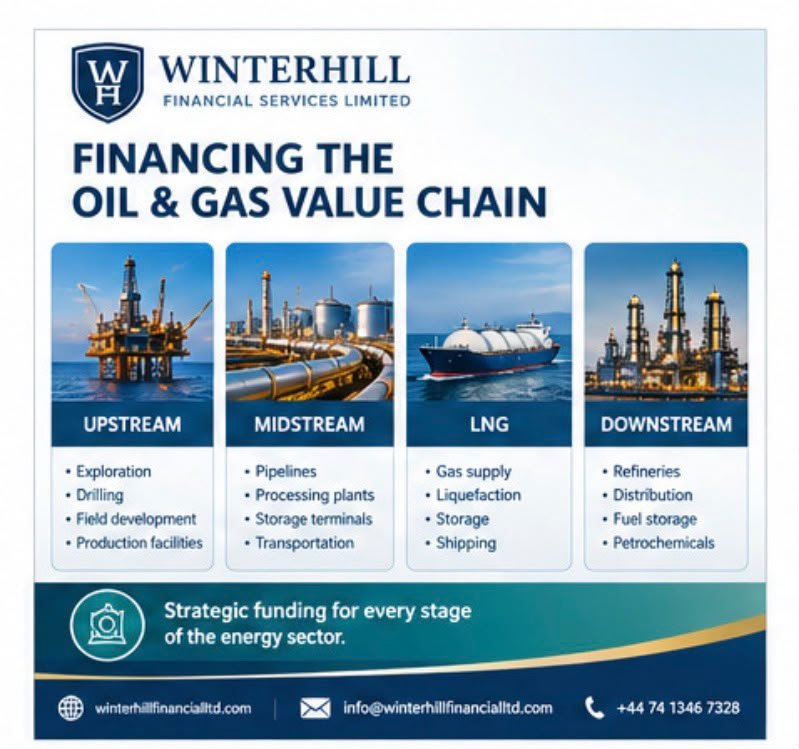
1. Upstream Oil and Gas Projects
Upstream activities include exploration, drilling, field development and hydrocarbon production.
These projects require significant technical and financial preparation.
Potential funding requirements include:
Exploration and appraisal expenditure.
Drilling equipment.
Offshore and onshore infrastructure.
Production facilities.
Engineering and technical services.
Field development expenditure.
Potential financiers will typically examine reserve assessments, production forecasts, licensing arrangements, development costs and the experience of the project operator.
2. Midstream Infrastructure Projects
Midstream activities involve the transportation, processing and storage of oil and gas.
Examples include:
Oil and gas pipelines.
Gas processing plants.
Storage terminals.
Gathering systems.
Transportation facilities.
Export terminals.
These projects may generate revenue through transportation tariffs, processing fees, storage charges or contracted throughput arrangements.
The financial model should demonstrate how these revenue sources will support operating expenditure and financing obligations.
3. Liquefied Natural Gas (LNG) Projects
LNG developments involve complex infrastructure for processing, liquefaction, storage and transportation of natural gas.
The financing structure may need to consider:
Gas supply agreements.
Liquefaction facilities.
Storage infrastructure.
Shipping arrangements.
Long-term purchase agreements.
International market demand.
Because LNG projects often involve multiple countries and counterparties, contractual and financial coordination is particularly important.
4. Downstream Oil and Gas Projects
Downstream developments include refineries, petroleum distribution networks, fuel storage facilities, LPG infrastructure and petrochemical plants.
Their financial viability depends on several factors, including feedstock availability, operating efficiency, product demand, distribution networks and pricing arrangements.
Project sponsors must demonstrate that the proposed facility can operate commercially and generate sufficient cash flow to meet its obligations.
How Lenders and Investors Assess Oil and Gas Project Bankability
Having a promising energy development does not automatically make it suitable for financing.
Bankability refers to the ability of a project to satisfy the financial, technical, commercial, legal and risk requirements of potential lenders and investors.
Several factors influence this assessment.
1. Technical Feasibility
The project must demonstrate that its proposed infrastructure and operations are technically achievable.
This may involve engineering studies, feasibility assessments, reserve reports, production forecasts and equipment specifications.
2. Commercial Viability
Financiers need to understand how the project will generate revenue.
Relevant considerations include:
Market demand.
Supply agreements.
Offtake contracts.
Product pricing.
Transportation arrangements.
Customer creditworthiness.
3. Financial Modelling
A comprehensive financial model should establish the project's expected revenue, expenditure, funding requirements and repayment capacity.
It should include realistic assumptions and sensitivity analysis.
4. Legal and Regulatory Compliance
Project sponsors must establish that they have the necessary rights, licences, permits and contractual arrangements to undertake the proposed development.
Cross-border transactions may also require additional regulatory and legal reviews.
5. Sponsor Experience and Financial Strength
Potential lenders and investors may examine the sponsor's track record, management capabilities, financial position and experience in delivering comparable projects.
6. Security and Credit Support
Depending on the transaction, lenders may require security over project assets, receivables, bank accounts, contractual rights or other acceptable collateral.
Bank Guarantees and SBLCs may also be considered where appropriate to the transaction.
7. Environmental and Social Considerations
Energy projects can have significant environmental and social implications.
Potential issues include emissions, land acquisition, biodiversity, worker safety, community engagement and pollution management.
Addressing these considerations early can help reduce regulatory delays and financing complications.
Managing the Major Risks Associated With Oil and Gas Project Finance
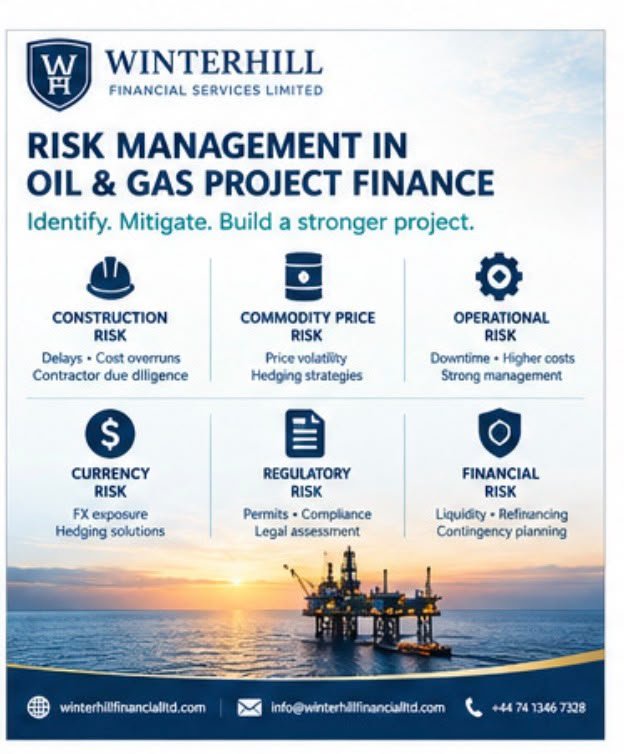
Risk management is one of the most important components of successful project financing.
Oil and gas developments face several risks that can affect their financial performance.
| Risk | Potential financial impact | Possible mitigation |
|---|---|---|
| Construction risk | Cost overruns and delays | Contractor due diligence and contractual protections |
| Commodity price risk | Reduced project revenue | Conservative pricing assumptions and suitable hedging |
| Operational risk | Lower production and higher costs | Strong operational management and maintenance |
| Credit risk | Delayed or missed payments | Counterparty assessment and appropriate guarantees |
| Currency risk | Increased debt repayment costs | Currency risk management |
| Regulatory risk | Delayed approvals or additional costs | Early legal and regulatory assessment |
| Environmental risk | Compliance costs and project disruption | Environmental and social risk management |
| Financing risk | Funding gaps and refinancing difficulties | Appropriate capital structuring and funding contingency |
A successful financing strategy does not eliminate every risk.
Instead, it identifies potential problems, establishes who is responsible for managing them and introduces appropriate financial and contractual safeguards.
The Project Finance Process: From Initial Assessment to Financial Close
Securing project funding is a structured process. Project sponsors should prepare before approaching potential financiers.
The following stages provide a practical framework.
Step 1: Define the Project
Establish the project's purpose, location, development stage, ownership structure and estimated capital requirement.
Step 2: Conduct a Feasibility Assessment
Prepare technical and commercial studies to determine whether the project is achievable and economically viable.
Step 3: Establish the Legal Structure
Identify the project ownership arrangements, relevant SPVs, licences, permits and contractual obligations.
Step 4: Prepare the Financial Model
Develop realistic revenue forecasts, expenditure projections, funding requirements and debt repayment scenarios.
Step 5: Identify Appropriate Funding Sources
Determine whether the project may benefit from senior debt, equity, structured financing, guarantees or other suitable funding arrangements.
Step 6: Prepare the Financing Documentation
Compile the financial model, business plan, project feasibility reports, ownership documents, contracts and relevant supporting information.
Step 7: Complete Financial and Compliance Due Diligence
Potential financing counterparties will assess the project, sponsor, counterparties, proposed security and applicable compliance requirements.
Step 8: Structure Risk Mitigation
Consider suitable guarantees, insurance, contractual protections, contingency funding and other risk management mechanisms.
Step 9: Engage Potential Financing Partners
Present the financing proposal to suitable lenders, investors or financial intermediaries.
Step 10: Negotiate and Reach Financial Close
Subject to satisfactory due diligence, credit approval, documentation and completion of all required conditions, the parties may proceed to financial close and funding.
The timeline varies considerably depending on project complexity, jurisdiction, funding source and the readiness of the documentation.
Why Choose Winter Hill Financial Services Limited for Project Funding Solutions?
Selecting a financial services partner is an important decision for businesses undertaking substantial commercial and infrastructure developments.
At Winter Hill Financial Services Limited, our financial solutions are designed to address different funding and liquidity requirements across domestic and international markets.
Our services include:
1. Debt Financing and Project Funding
We support clients exploring structured debt financing and funding arrangements for business expansion, infrastructure development and eligible commercial projects.
2. Bank Guarantee Solutions
We assist with Bank Guarantee arrangements for appropriate commercial, contractual and project-related requirements.
3. SBLC Solutions
We support clients seeking Standby Letters of Credit for eligible international commercial transactions and financial commitments.
4. BG/SBLC Monetization
We help clients explore potential liquidity solutions involving eligible financial instruments, subject to verification, due diligence and acceptable transaction terms.
5. Business and SME Loans
We provide business and SME financing solutions designed to support operational requirements, capital expenditure and commercial expansion.
6. Financial Instrument Advisory
We help clients understand the role, documentation and potential applications of different financial instruments within their wider funding arrangements.
Our approach emphasises transparent communication, appropriate due diligence, transaction suitability and clear documentation.
Explore our complete range of Winter Hill Financial Services.
What Should Oil and Gas Project Sponsors Prepare Before Applying for Funding?
Before approaching lenders or financial partners, project sponsors should assemble a comprehensive financing package.
The following information can help potential financiers understand the project and assess its requirements.
Project Information
Project description and objectives.
Project location and ownership.
Development stage.
Estimated completion timeline.
Technical Documentation
Feasibility studies.
Engineering reports.
Reserve and production assessments, where relevant.
Equipment requirements.
Construction and development plans.
Financial Documentation
Total project cost.
Capital expenditure estimates.
Operating expenditure forecasts.
Financial projections.
Proposed funding structure.
Expected repayment strategy.
Commercial Documentation
Supply agreements.
Offtake agreements.
Customer contracts.
Transportation arrangements.
Market assessments.
Legal and Compliance Documentation
Company registration documents.
Ownership information.
Licences and permits.
Relevant project contracts.
Beneficial ownership information.
Applicable compliance documentation.
Funding Proposal
Amount of funding requested.
Proposed financing instrument.
Preferred financing tenor.
Available collateral or credit support.
Proposed repayment arrangements.
Expected funding timetable.
The quality and completeness of this information can significantly influence the efficiency of the financing assessment.
Frequently Asked Questions About Oil and Gas Project Finance
1. What is oil and gas project finance?
Oil and gas project finance is a method of funding energy developments through financial arrangements structured around the project's assets, expected cash flows, contractual commitments and repayment capacity. It may involve debt, equity, guarantees and other financial instruments.
2. How can oil and gas companies obtain project funding?
Companies can explore commercial bank loans, institutional financing, private investment, structured debt facilities, equity partnerships and other acceptable funding arrangements. The appropriate option depends on project viability, sponsor strength, documentation and lender requirements.
3. Can a Bank Guarantee be used for oil and gas project financing?
A Bank Guarantee may support certain project-related contractual obligations and financing arrangements. Whether it can support a particular funding transaction depends on the guarantee's terms, issuing bank, beneficiary requirements and the financing institution's acceptance.
4. What is an SBLC in project finance?
A Standby Letter of Credit is a bank undertaking designed to provide payment protection if an applicant fails to meet specified contractual obligations. Depending on the transaction, an SBLC may support procurement, payment obligations and certain project financing arrangements.
5. Can an SBLC be monetized to fund an energy project?
An eligible SBLC may potentially be used as collateral to obtain financing from an acceptable counterparty. The instrument must undergo authentication, legal review, compliance checks and financial assessment. Monetisation is subject to approval and agreed terms.
6. What documents are required for oil and gas project financing?
Typical requirements include project feasibility studies, technical assessments, financial models, corporate documents, licences, commercial contracts, ownership information and details of the proposed funding structure. Additional requirements depend on the transaction.
7. What is the difference between project finance and corporate finance?
Corporate finance generally relies on the borrower's overall financial position and balance sheet. Project finance focuses more directly on the financial performance, assets, contracts and anticipated cash flows of a particular project.
8. What makes an oil and gas project bankable?
A bankable project typically demonstrates technical feasibility, commercial viability, realistic financial projections, appropriate legal permissions, credible management, enforceable contracts and sufficient repayment capacity.
9. Can international investors participate in oil and gas project financing?
Yes. International investors, commercial banks, infrastructure funds and other financial institutions may participate in eligible energy projects, subject to jurisdictional requirements, investment mandates, due diligence and transaction approval.
10. How long does oil and gas project financing take?
There is no universal timeline. Financing may take several months or longer, depending on the project's complexity, documentation, regulatory approvals, due diligence and negotiations with potential financing partners.
11. Does Winter Hill Financial Services Limited provide project funding solutions?
Winter Hill Financial Services Limited provides financial services that include debt financing, project funding support, business loans, Bank Guarantees, SBLCs and BG/SBLC monetisation solutions. The availability and suitability of any financing arrangement depend on the proposed transaction, due diligence and approval by the relevant financing counterparties.
Final Thoughts: Building a Stronger Financial Foundation for Energy Projects
Oil and gas developments require more than substantial capital. They require a carefully considered financial structure, credible commercial arrangements, appropriate risk allocation and a clear strategy for meeting financial obligations.
Whether a project involves offshore exploration, pipeline construction, gas processing, LNG infrastructure, petroleum storage or downstream distribution, the financing approach must reflect its unique technical and commercial requirements.
Debt financing, equity investment, Bank Guarantees, SBLCs and other structured financial solutions may all have a role in supporting eligible energy-related transactions.
For project sponsors, the most important first step is understanding the funding requirement and preparing a financing proposal that potential financial partners can properly evaluate.
Winter Hill Financial Services Limited remains committed to supporting businesses, developers and investors exploring structured financial solutions for their commercial and project funding requirements.
Through our debt financing, project funding, financial instrument and BG/SBLC services, we aim to help clients explore appropriate financial structures for their objectives.
Are You Planning an Oil and Gas or Energy Infrastructure Project?
The right financing strategy starts with understanding your project.
Whether you are developing an oil field, expanding a petroleum facility, constructing a pipeline or seeking financial instruments to support an international energy transaction, Winter Hill Financial Services Limited welcomes enquiries from businesses and project sponsors seeking to explore suitable funding solutions.
Contact our team to discuss your project requirements and explore the financial arrangements that may be appropriate for your transaction.
Winter Hill Financial Services Limited
Website: https://winterhillfinancialltd.com/
Email: info@winterhillfinancialltd.com
Address: 2nd Floor, Gaspé House, 66–72 Esplanade, St Helier, Jersey, JE1 1GH.
Winter Hill Financial Services Limited – Supporting Business Growth Through Structured Financial Solutions.