
Long-Term Loans for Industrial Property: Financing Growth in a Changing Global Economy

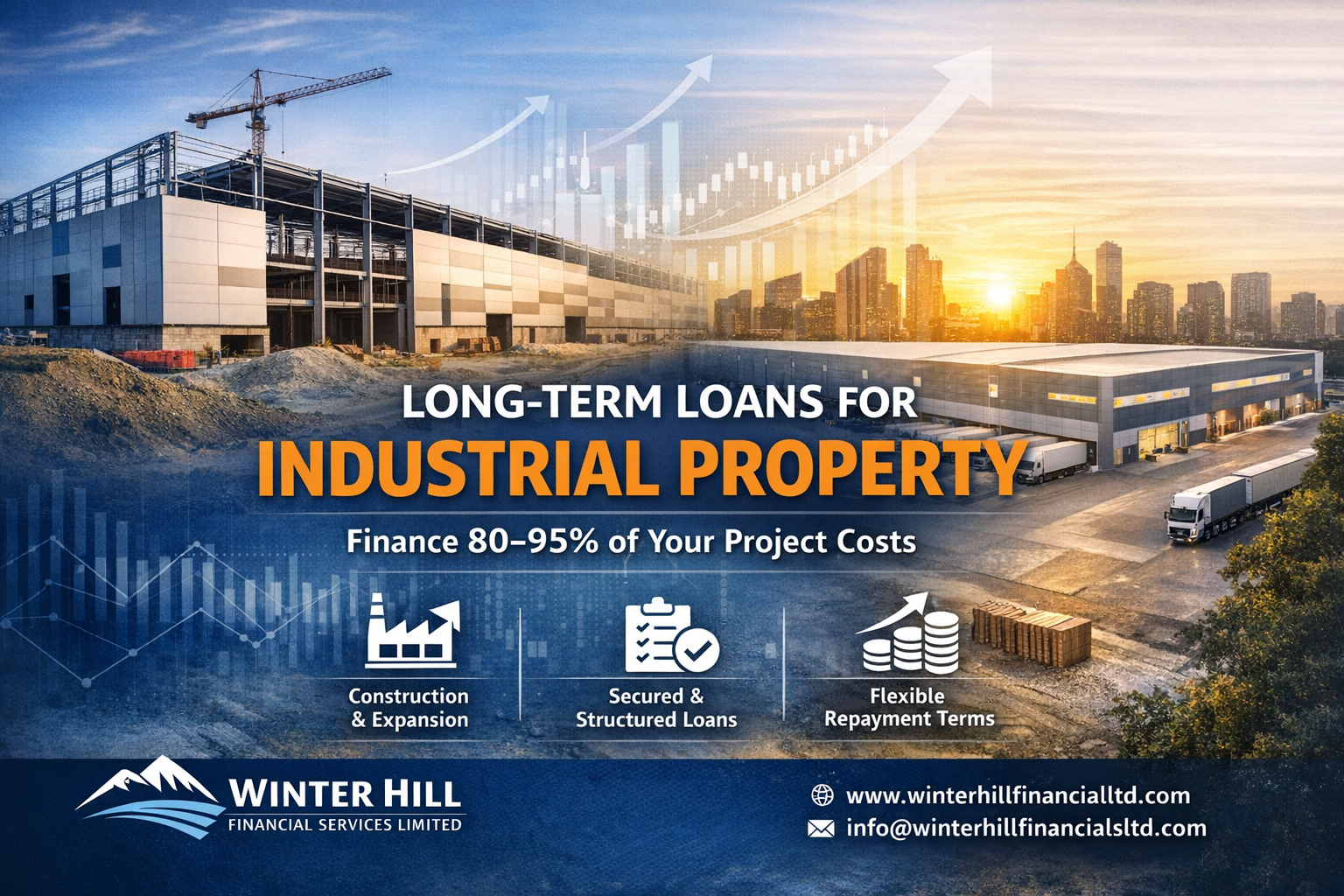
In the modern business landscape, access to reliable financing is one of the most important factors determining whether large industrial projects succeed or stall. As global economies continue to evolve—driven by technological innovation, supply-chain transformation, and infrastructure expansion—businesses increasingly require substantial capital to develop and acquire industrial property.
Industrial property projects, such as manufacturing plants, logistics hubs, warehouses, and production facilities, often require significant upfront investment. These projects involve costs related to land acquisition, construction, regulatory compliance, machinery installation, and operational infrastructure. For many businesses, these costs can run into millions, making external financing not just beneficial but essential.
Long-term industrial property loans offer a practical and structured solution to support these capital-intensive projects. Financial institutions such as Winter Hill Financial Services Limited provide long-term loan solutions designed to help businesses secure the funding required to build, expand, or purchase industrial property assets.
Why Industrial Property Investment Matters Today
Industrial real estate has become one of the most strategically important sectors of the global economy. As international trade expands and digital commerce accelerates, the demand for logistics infrastructure and manufacturing capacity continues to grow.
Businesses around the world are investing in modern facilities that support efficient production, storage, and distribution. Warehouses, manufacturing plants, industrial parks, and distribution centres are now essential components of supply chains.
Several key global trends are fueling demand for industrial property investment:
1. The growth of e-commerce
Online retail has transformed logistics networks worldwide. Companies now require large fulfilment centres and distribution hubs to meet consumer demand and deliver goods quickly.
2. Supply chain diversification
Many organisations are investing in additional manufacturing and storage locations to reduce dependence on a single region or supplier.
3. Technological transformation in manufacturing
Automation, robotics, and advanced manufacturing technologies require purpose-built facilities designed for modern industrial operations.
4. Infrastructure expansion in emerging markets
Rapid industrialisation in developing economies is increasing demand for new production facilities and logistics networks.
These developments make industrial property one of the most valuable long-term investments for companies seeking operational resilience and market growth.
Understanding Long-Term Loans for Industrial Property
Long-term loans for industrial property are structured financing arrangements designed specifically to support large-scale property projects over extended repayment periods. These loans are typically offered by banks and specialised finance institutions and are structured to align with the long-term nature of industrial investments.
At Winter Hill Financial Services Limited, long-term loans are available for periods ranging from six months up to a maximum of twenty years. This flexible timeframe allows businesses to spread the cost of major investments over manageable repayment schedules.
These loans are commonly used for:
- Construction of new industrial facilities
- Expansion of existing factories or warehouses
- Acquisition of industrial buildings or land
- Development of logistics centres and distribution hubs
- Purchase of manufacturing plants or production facilities
By offering long repayment terms, these loans enable businesses to undertake large infrastructure projects while maintaining operational liquidity.
Financing Up to 95% of Project Costs
One of the most significant advantages of long-term industrial property loans is the ability to finance a substantial portion of the total project cost.
Depending on the financial structure of the project and the assessment of risk, financing can typically cover between 80% and 95% of the total investment required. This high loan-to-value ratio allows businesses to pursue major projects without committing excessive internal capital.
Such financing structures are particularly valuable for companies operating in sectors that require large-scale infrastructure investments, including:
- Manufacturing and industrial production
- Logistics and supply chain operations
- Technology and electronics manufacturing
- Automotive production
- Energy and industrial infrastructure
Access to high-value financing allows companies to move forward with expansion plans while preserving their working capital for operational activities.
Secured Lending and Property Valuation
Industrial property loans are generally structured as secured loans, meaning the property being financed serves as collateral for the loan. This arrangement provides greater financial security for lenders while allowing borrowers to access higher loan amounts and more competitive lending terms.
As part of the financing process, lenders typically require a professional property valuation to determine the asset’s market value. This valuation helps ensure that the loan structure reflects the true worth of the property being financed.
In addition to property valuation, lenders assess several factors before approving financing, including the borrower’s financial stability, the feasibility of the project, and the long-term business strategy associated with the investment.
The Importance of a Strong Business Plan
Businesses seeking long-term industrial property financing must present a comprehensive and well-structured business plan. Financial institutions carefully evaluate project viability before approving funding.
A strong loan application typically includes:
- A detailed business plan outlining the project goals
- Financial forecasts and revenue projections
- Construction or acquisition plans
- Property valuation reports
- Market demand analysis
- Risk assessment and mitigation strategies
These elements allow lenders to evaluate whether the project is financially sustainable and capable of generating the revenue required to support loan repayments.
Industrial Property Financing in the Current Global Economy
The global economic environment has undergone significant changes in recent years. Factors such as inflation, evolving trade relationships, geopolitical shifts, and technological transformation have reshaped the way businesses approach infrastructure investment.
Despite economic uncertainty in some sectors, industrial real estate has remained one of the most resilient asset classes. Demand for logistics facilities, manufacturing plants, and storage infrastructure continues to rise as global trade and digital commerce expand.
Companies are increasingly recognising the importance of owning or controlling their operational facilities. Industrial property investments not only support business operations but also serve as long-term assets that can appreciate in value over time.
Access to long-term financing enables businesses to take advantage of these opportunities while managing financial risk responsibly.
How Winter Hill Financial Services Limited Supports Industrial Growth
Winter Hill Financial Services Limited provides financing solutions tailored to businesses seeking long-term investment in industrial property.
Through structured loan programmes, the institution supports companies undertaking projects such as:
- Industrial facility construction
- Warehouse and logistics centre development
- Manufacturing plant expansion
- Acquisition of industrial real estate assets
By offering long-term loan structures covering a significant portion of project costs, Winter Hill Financial Services Limited helps businesses turn strategic development plans into operational realities.
Their financing solutions are designed to align with the long-term financial cycles typical of industrial infrastructure projects.
Building the Future Through Strategic Financing
Industrial development plays a fundamental role in economic growth, job creation, and technological advancement. From manufacturing hubs to global logistics networks, industrial infrastructure supports the systems that keep modern economies functioning.
However, these projects require significant financial resources and long-term planning. Structured financing solutions such as industrial property loans provide businesses with the capital necessary to invest confidently in large-scale infrastructure projects.
With repayment terms extending up to twenty years and financing covering up to 95% of project costs, long-term industrial property loans provide a powerful tool for businesses looking to expand their operational capacity and strengthen their market position.
Contact Winter Hill Financial Services Limited
Businesses interested in exploring long-term financing solutions for industrial property development or acquisition can contact Winter Hill Financial Services Limited for further information.
Website: https://winterhillfinancialltd.com
Email: info@winterhillfinancialsltd.com
Professional financing guidance can help businesses unlock opportunities for growth, expansion, and long-term industrial investment.